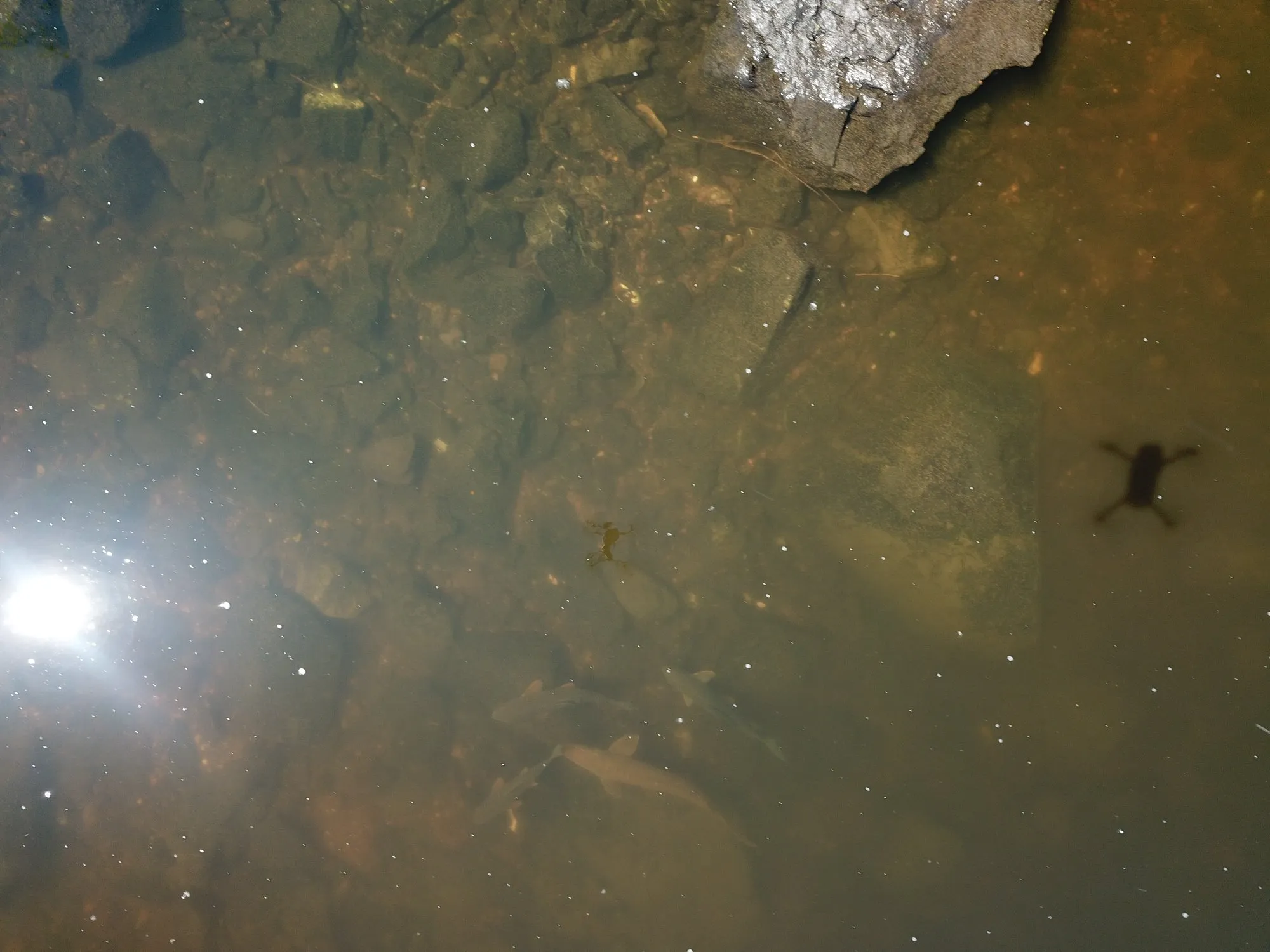
In collaboration with Hydro-Québec and the MFFP, BETO has developed a technique to detect and quantify the presence of fish in the spillway of the Drummondville hydroelectric dam.
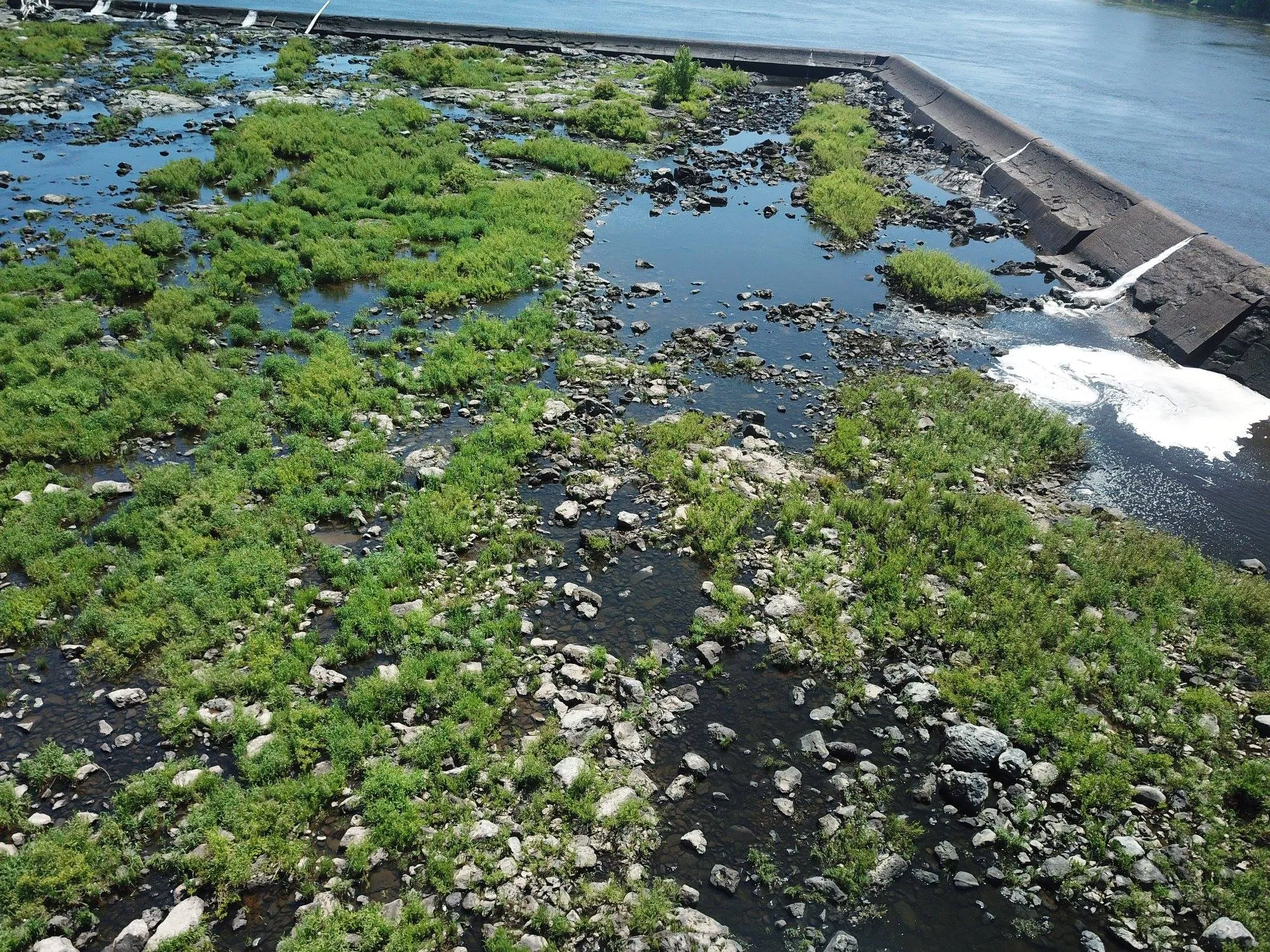
At this point, the flow of the Saint-François River is segmented into two parts: the power plant, which turbines part of the river to produce energy, and the spillway, which discharges the excess water. The topography of the riverbed means that when there isn’t enough water, several small pools become isolated from each other, and fish can get trapped inside. For this reason, Hydro-Québec deliberately leaves a continuous flow in the weir during the fish spawning period, so that they can move around freely.
In summer, after the fish spawning period, Hydro-Québec managers adjust the flow pattern of the Saint-François River to turbinate more water, resulting in virtually no flow through the weir.
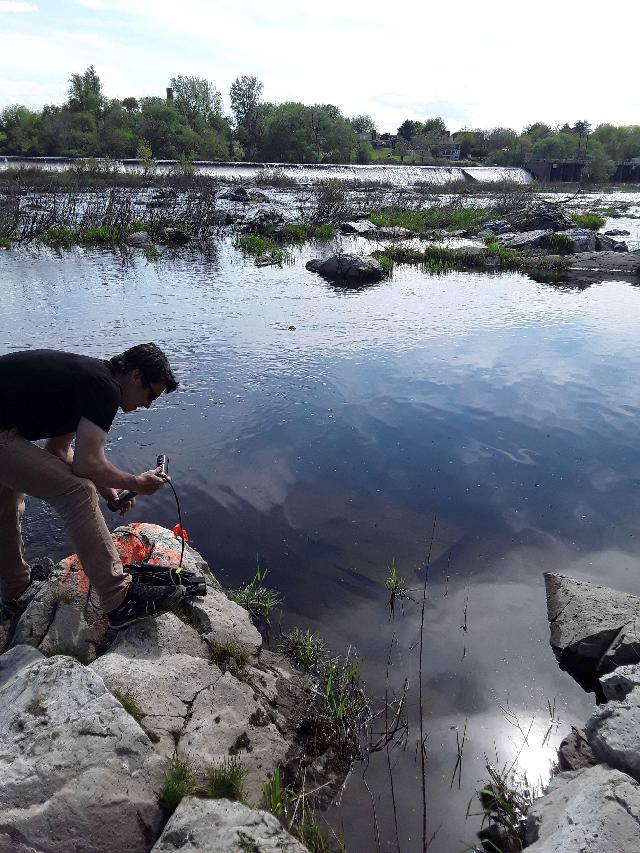
In order to prevent fish from remaining captive in the pools when water flows were restored, we carried out numerous observations during the spring to determine the approximate number of fish present in these pools, and which of them seemed to be the most problematic.
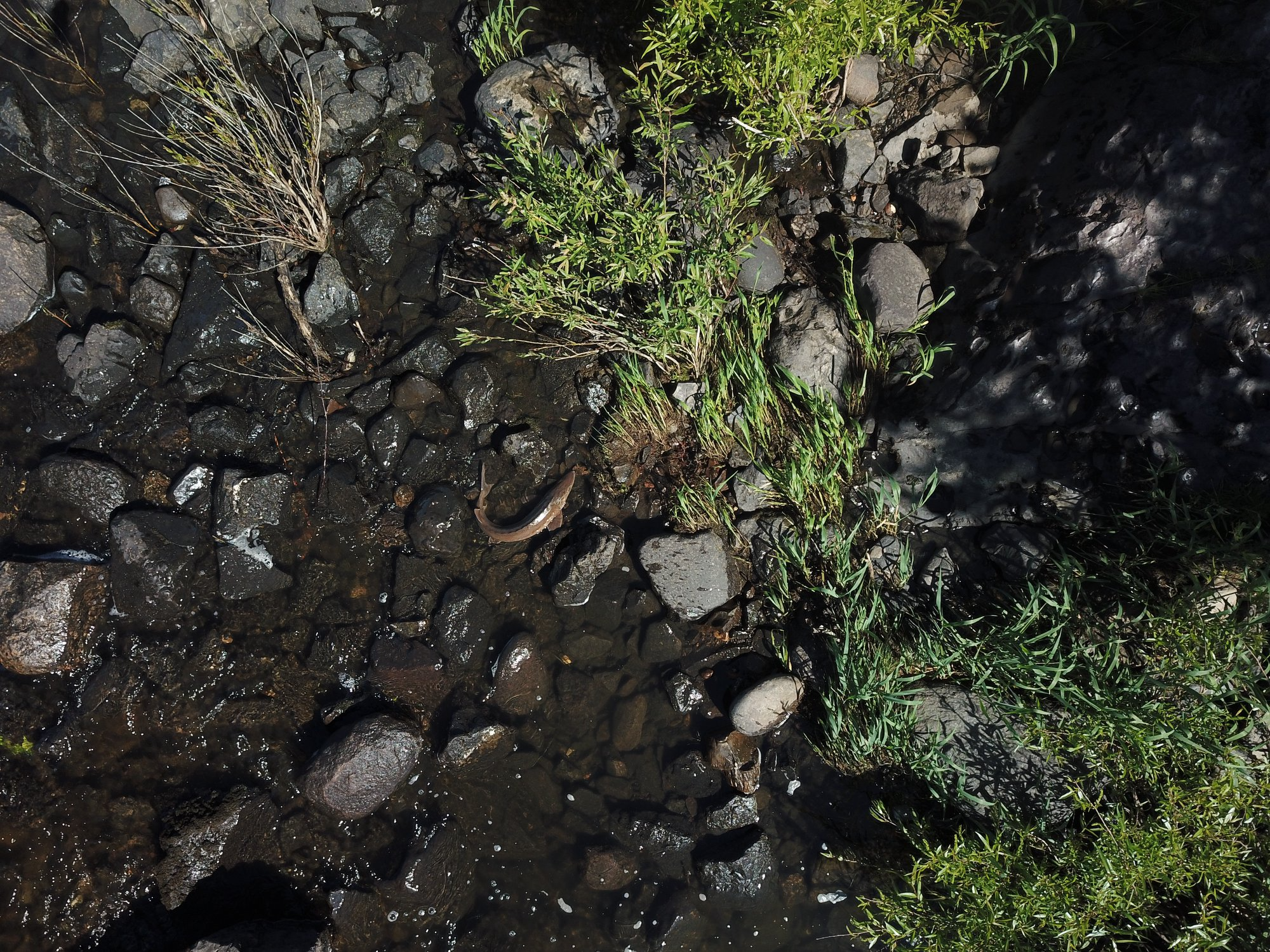
Two methods were tested simultaneously to answer these questions: 1) on-the-spot observation with polarized goggles to better see into the water, and 2) observation using a drone.
Excellent collaboration with Hydro-Québec staff enables water flows to be modulated to ensure a smooth transition to a flow-free weir. During the transition, operators adjust the power plant’s turbining capacity as required to create a succession of water withdrawals from the weir (in the manner of numerous small “ripples”), resulting in a gradual withdrawal of fish from the pools. With each “wave”, a certain number of fish leave the weir and return to the main river channel, until there are none left. This can take several days!
By observing in real time, we can be sure that no fish are left, and if they are, we can take the necessary steps to remove them.These observations have continued every spring/summer since 2018.