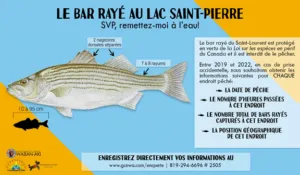
Since 2019, we’ve been carrying out a striped bass project in collaboration with the Bureau environnement et terre de Wôlinak, the Grand Council of the Waban-Aki Nation and the Ministère des Forêts de la Faune et des Parcs. There are several distinct populations of this species, one of which remains in the St. Lawrence River between Montreal and Kamouraska year-round.
In the past, the St. Lawrence River was home to a very abundant striped bass population. This species was the subject of intensive recreational and commercial fishing, so much so that the population was considered extinct in the 1960s. The species was designated “endangered” in order to protect it and its critical habitats. A few years ago, wildlife managers initiated a process to reintroduce striped bass into the St. Lawrence.
Today, after several years of effort, the situation seems to be gradually improving. Sectors are being reused again, new spawning grounds are being discovered and young individuals are being captured (indicating good reproduction). Numerous research projects, including our own, have greatly increased our knowledge of this species and its evolution.
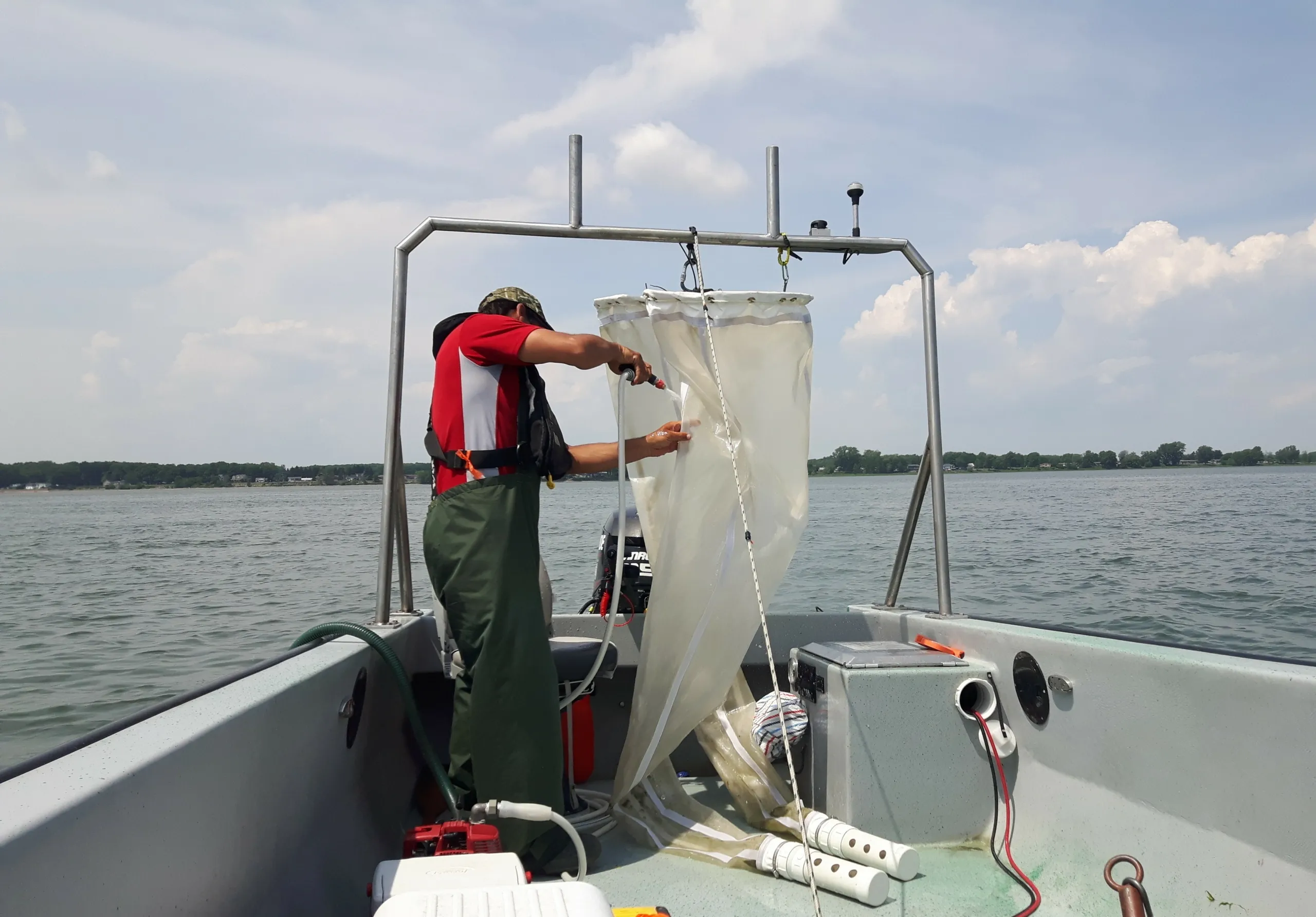
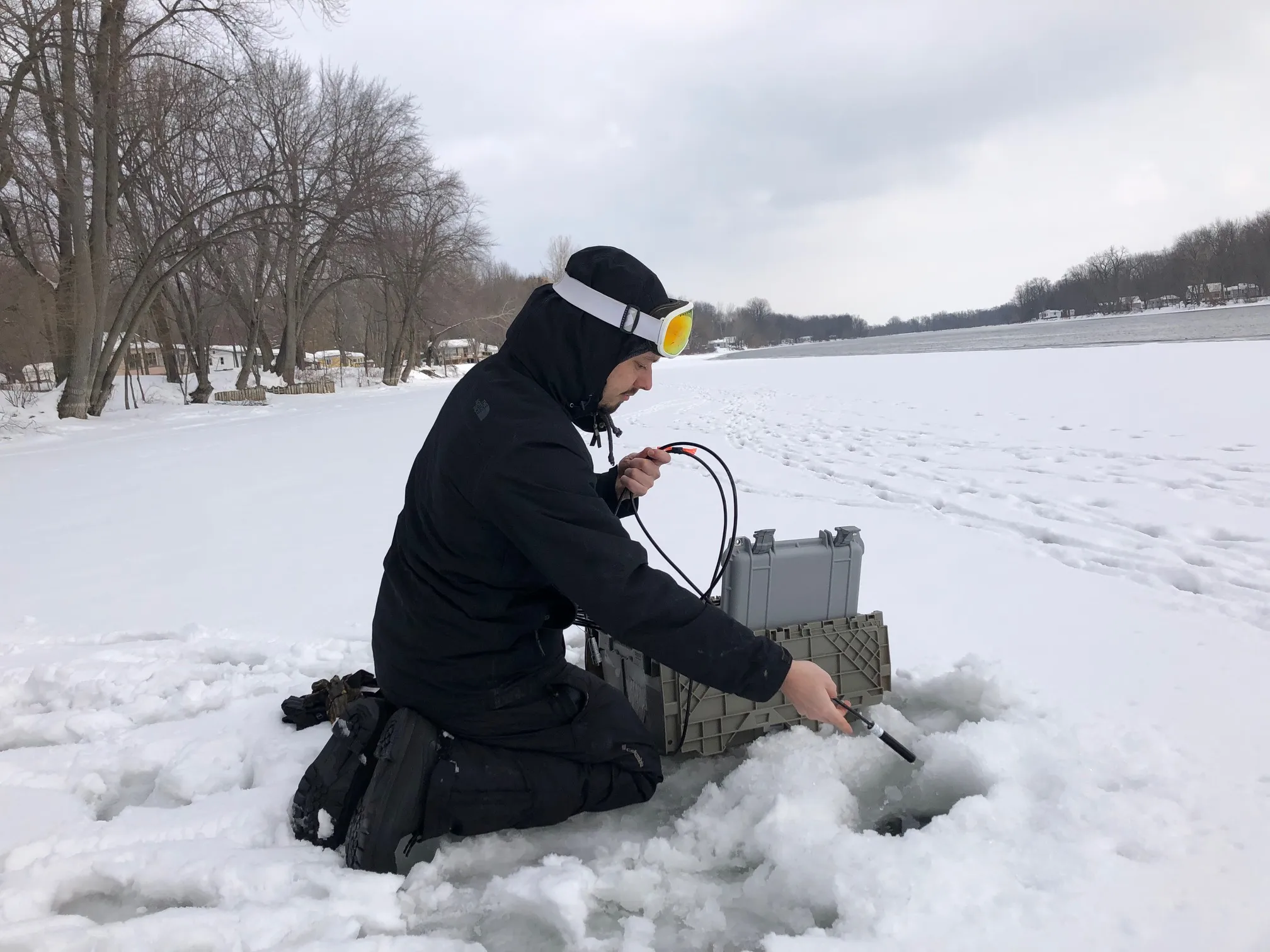
More specifically, our work aims to identify the essential habitats of this population at different times of the year, particularly in the Sorel Islands archipelago. We are documenting the presence of spawners, eggs and larvae, while tracking the movement of individuals throughout the year using telemetry tools.
Although the situation is improving, the species still retains its legal status as “endangered”. Given that the pressures on its environment are still very much present, and that animal population dynamics is an extremely complex subject that evolves over long periods of time, it is vital to continue the research that will help this species to recover once and for all, and subsequently to establish sound, sustainable management methods. One thing is certain: we’re on the right track!