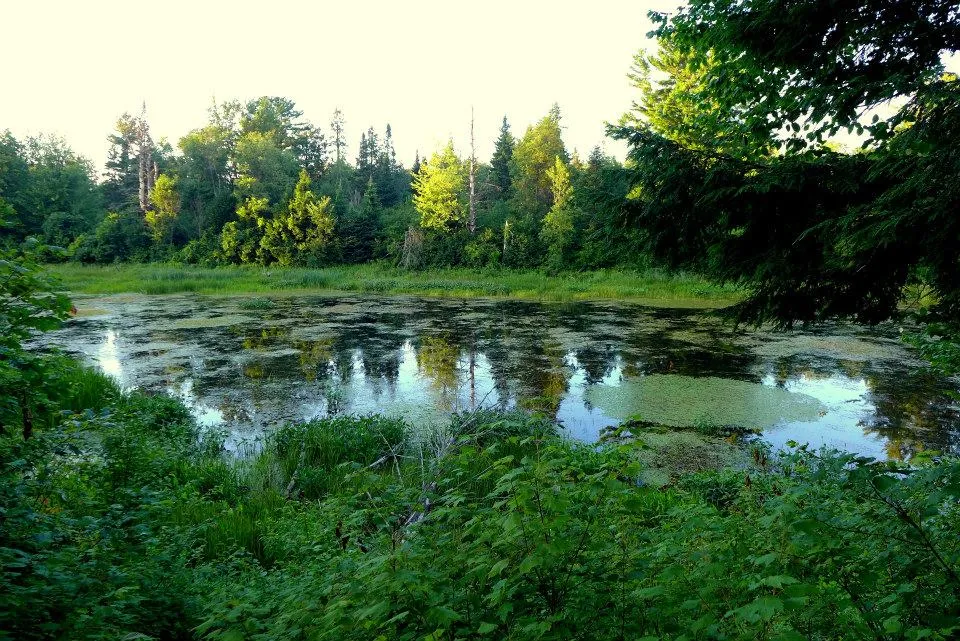
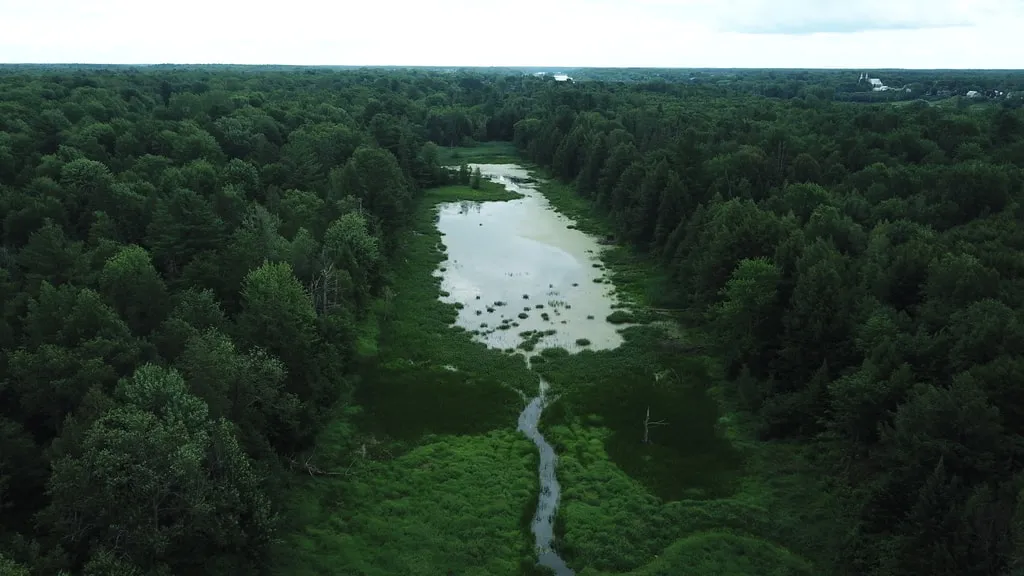
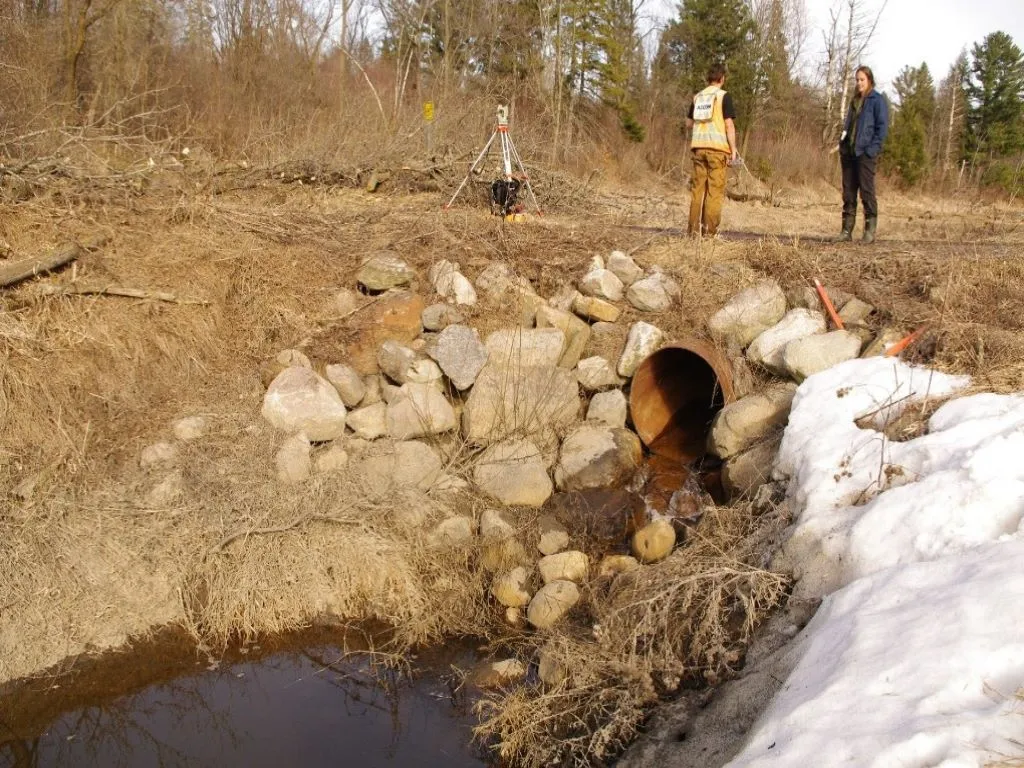
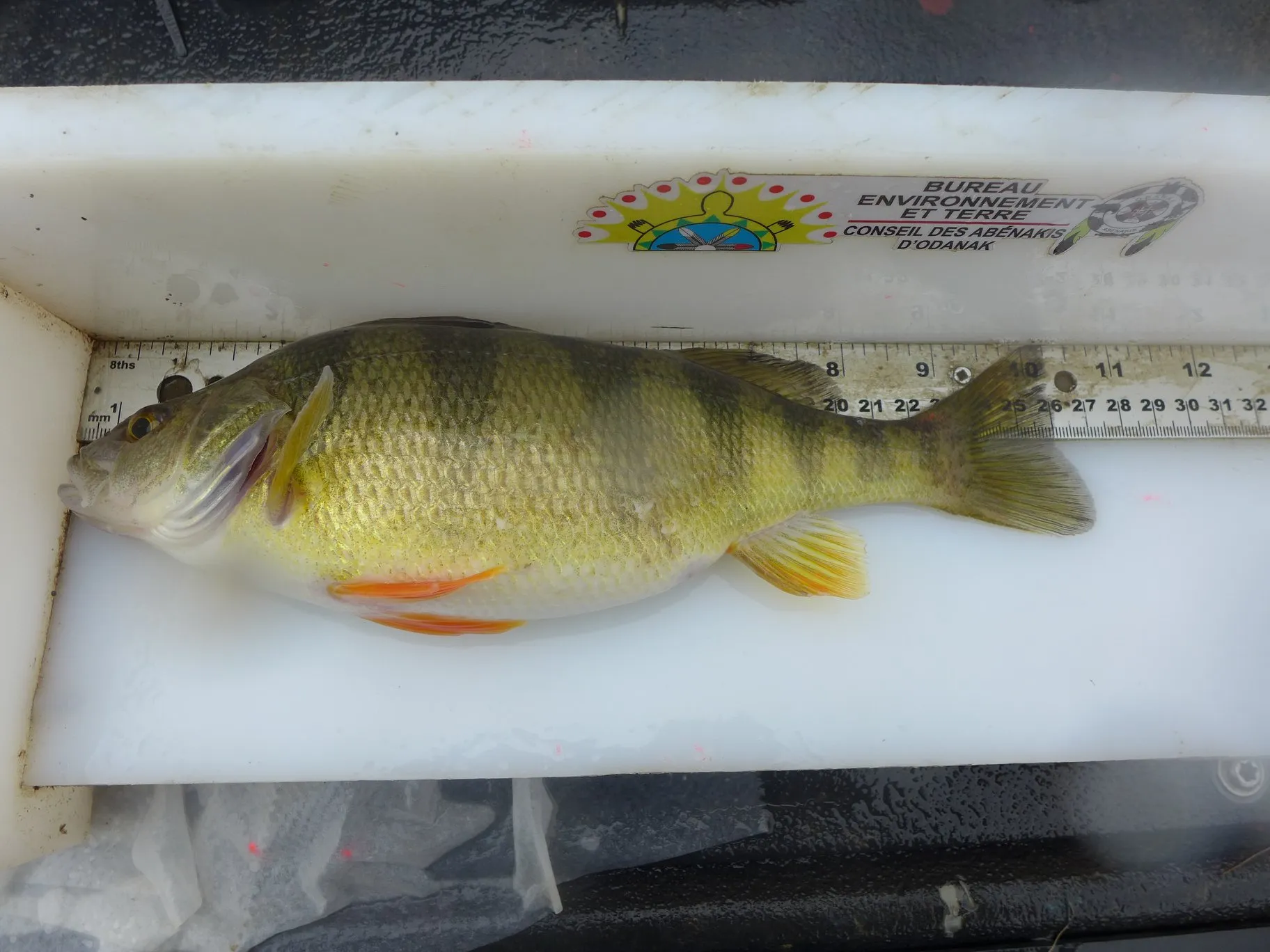
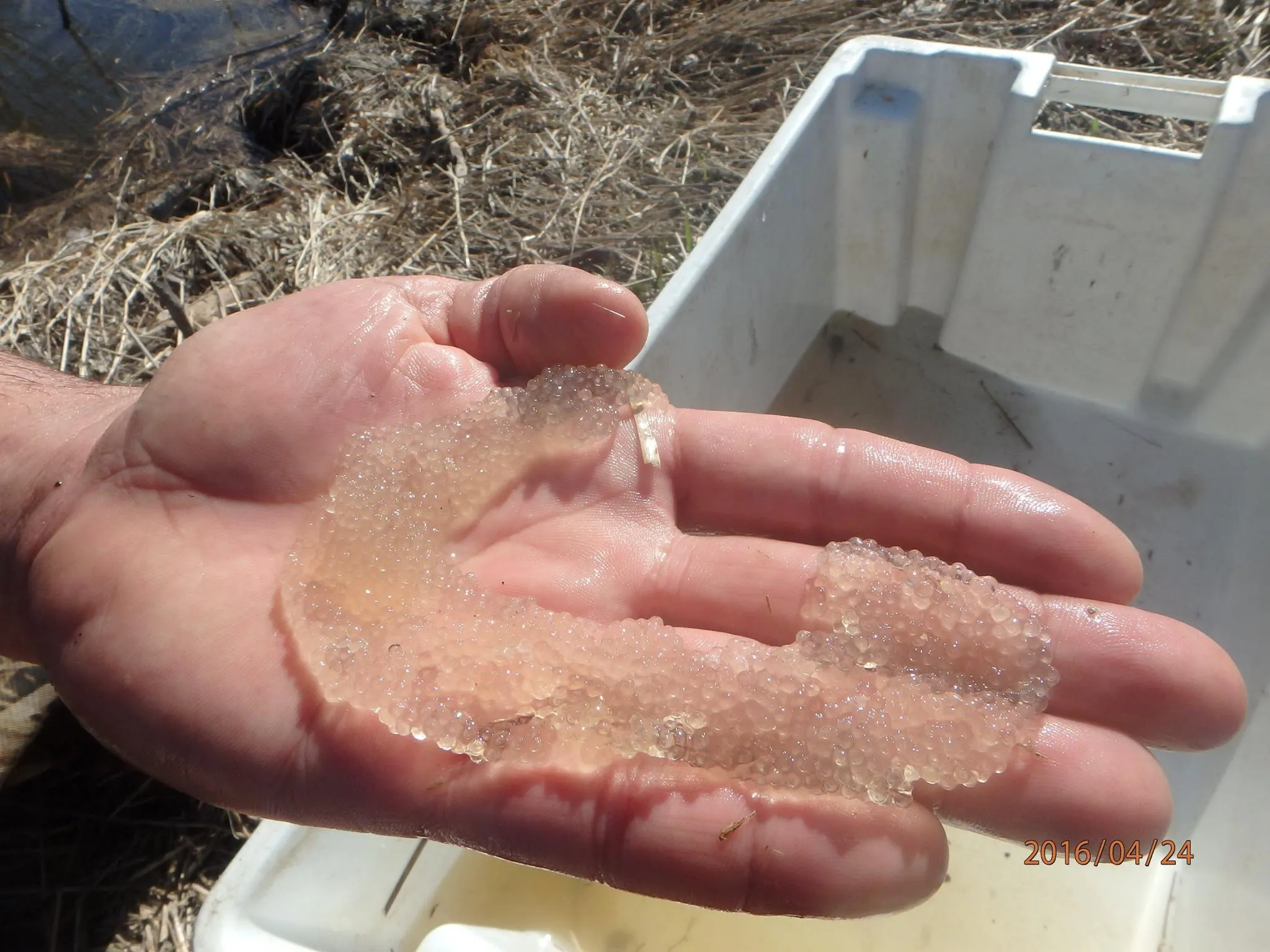
Habitat development was carried out in the Odanak territory to promote the free movement of fish between the Saint-François River and two “perched” marshes. These improvements were aimed in particular at yellow perch spawning in the marshes. During low spring floods, water levels prevented the yellow perch from crossing the old culverts, which protruded into the river.
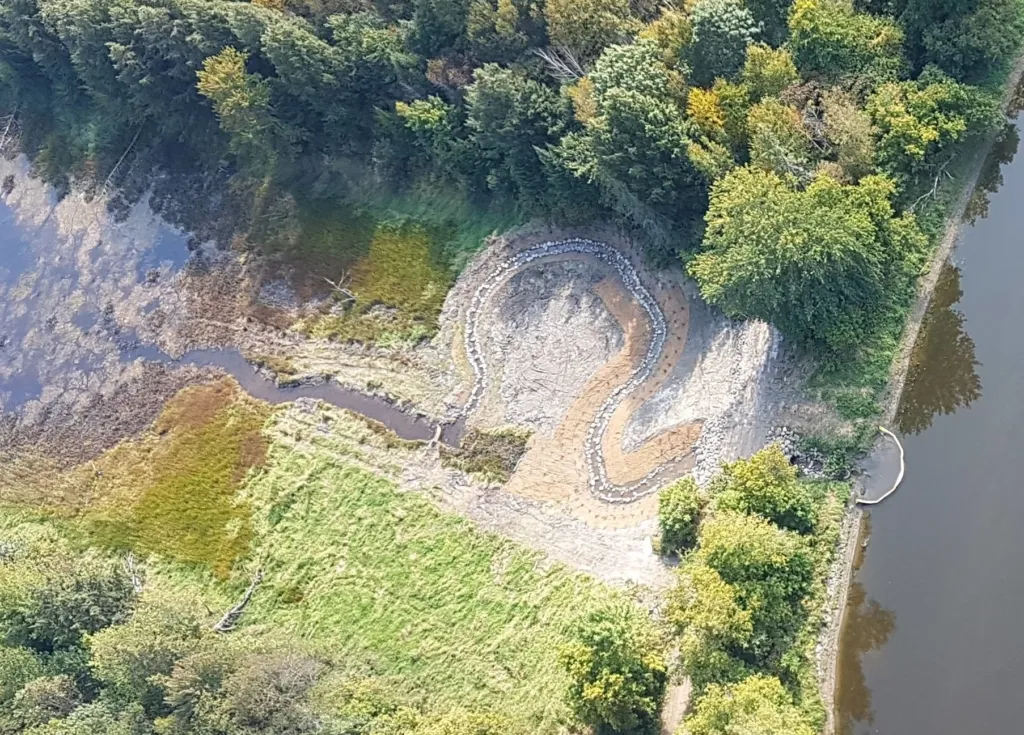
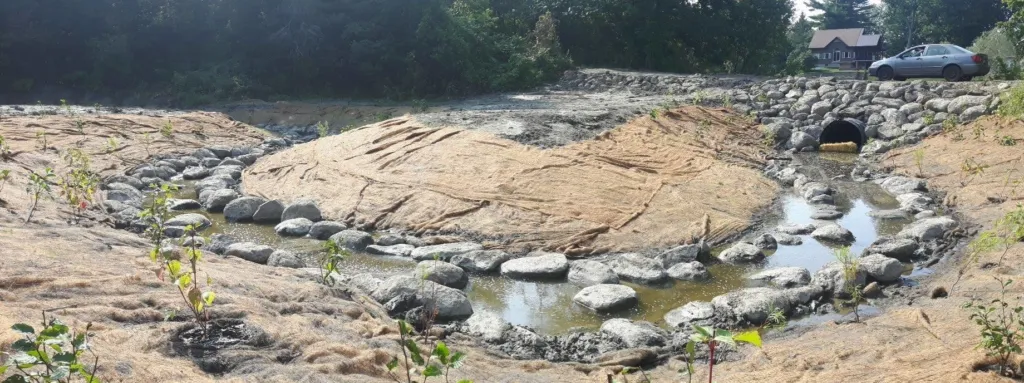
That’s why, in 2014, we carried out an initial development at marsh #1 in Odanak. This mainly involved changing the culvert for a larger one by recessing it into the substrate. In order to create a stream with adequate flow for yellow perch, we reshaped the stream’s course, lengthening it considerably and creating a succession of small basins and stone restrictions. The new stream banks were solidified with coconut mats and shrub planting, improving the amount of spawning substrate available to yellow perch. A very similar development was subsequently carried out at marsh #2 in 2017.
Fish circulation and larvae production were monitored at marsh #1 from spring 2014 to 2019, and at marsh #2 from spring 2016 to 2019. Physicochemical, vegetation recovery and infrastructure quality monitoring were also carried out in subsequent years.
To date, these surveys suggest that the facilities are fulfilling their functions. Even during low water levels, yellow perch are able to reach the marshes without constraint. Larval monitoring also confirms that spawning occurs every year.
However, a certain amount of potential spawning and juvenile rearing habitat is still inaccessible due to the low water levels observed in certain springs (and accentuated in summer). As the entire surface area of the marsh is considered high-quality spawning and rearing habitat, less water automatically translates into a loss of habitat potential for yellow perch spawning there. What’s more, a slightly higher water level would be an asset for several other species groups (amphibians, reptiles, waterfowl, etc.).
That’s why a new phase of the project is being launched in 2021-2022, involving a pre-project study to raise the water level in marsh #2. A monitoring plan has been put in place, involving regular monitoring of water levels through culvert observations, drone photos of the marsh and water level measurements.